
Reviewed · JEDDAH TOURS
Guided Tour in Jeddah by local woman
Jeddah’s old town is best understood on foot, one shaded alley and carved wooden window at a time. With local guide Ferial, you begin at Bab Jadeed in Albalad, then move through historic buildings, Biet Nassif, Al Shafei Mosque, cafés, food stalls, and workshops that are easy to miss on your own.
I like the small group of no more than seven, which gives Ferial room to answer questions and adjust the pace. I also like the late-afternoon timing used by some guests, when the heat eases and Albalad changes from quiet old streets into a lively evening meeting place.
The main consideration is the price: $120 per person is a serious spend for three hours. It makes the most sense if you value hotel pickup, a private-feeling small group, cultural explanation, and help finding places you might otherwise walk straight past.
Key points to know before you book
- Start at Bab Jadeed: The walking portion begins at one of Albalad’s historic entrances, with old buildings appearing almost immediately.
- See Biet Nassif: This important house gives the tour a strong architectural and cultural focus.
- Visit Al Shafei Mosque: The mosque sits in the narrow lanes of old Jeddah, where a guide is especially useful.
- Travel with Ferial: You receive an English-language tour led by a local woman who also suggests highly recommended restaurants.
- Allow three hours: The experience combines hotel pickup, about 1.5 hours in Jeddah, and about 1.5 hours of guided touring.
- Expect a small group: The maximum is seven people, and the activity is listed as wheelchair accessible.
Why Albalad is the right place to spend three hours
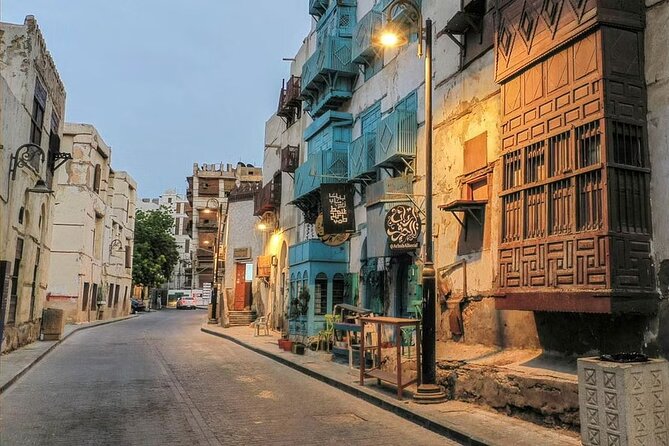
Albalad, or Historical Jeddah, is the city’s old town. Its appeal is not one grand monument that you visit, photograph, and leave. The interest comes from the way the streets, houses, doors, mosques, shops, and small gathering places fit together.
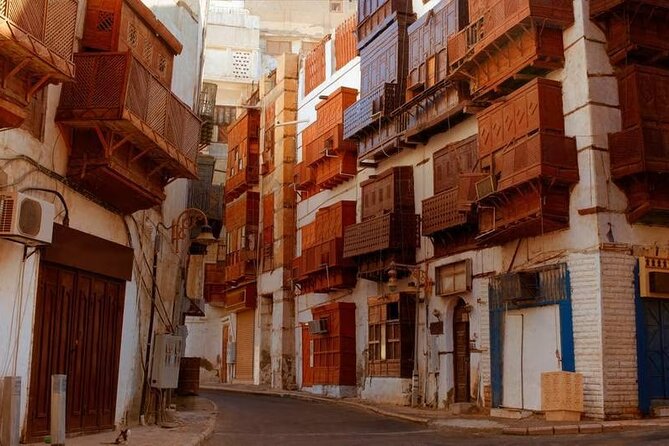
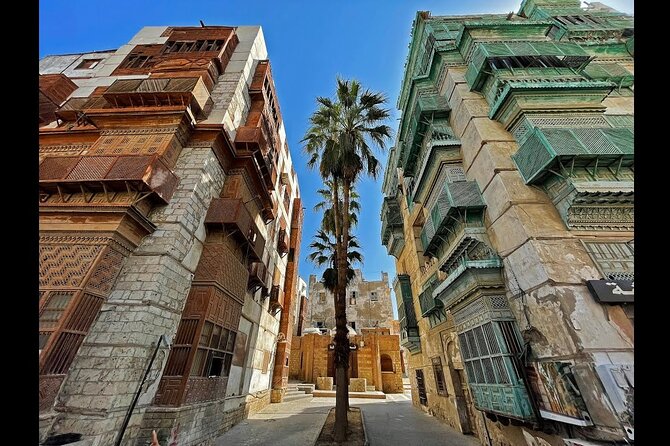
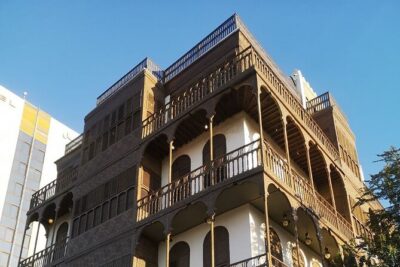
You will walk among distinctive old buildings and hear how they connect to Saudi Arabia’s wider history and culture. The buildings themselves are worth attention. Look up at the façades, windows, and wooden latticework rather than treating the walk as a simple route from one famous stop to the next.
This is where Ferial adds real value. A first-time visitor can see an old door or a tall house, but not know what matters about it. Ferial’s role is to explain the building and the social life around it, then point out places that do not announce themselves with a large sign.
The tour also gives you a local woman’s view of the district. That does not mean the experience is limited to formal history. It includes everyday culture, food, drinks, local cafés, and the people who still use these old streets.
More Guided Tours in Jeddah
- Historic District Tour in Jeddah by a Local Guide
★ 5.0 · 49 reviews - Guided Tour in Jeddah by local woman
★ 5.0 · 48 reviews - Jeddah: Al-Balad Old Town Historical City Guided Tour
★ 5.0 · 47 reviews
Getting there from your hotel
The tour begins with pickup from your hotel in a comfortable, air-conditioned vehicle. That is a useful touch in Jeddah, especially when the weather is hot and you want to save your energy for the walking portion.
During the drive, you pass Jeddah’s flagpole. It is not presented as the main stop, but it gives you a quick city sight before you reach Albalad. The vehicle transfer also means you do not need to arrange a separate taxi to the historic district.
Once you arrive, the tour changes character. You leave the vehicle behind and begin on foot at Bab Jadeed. Make sure you are ready for a walking tour through old lanes rather than a vehicle-based sightseeing circuit.
The activity is listed as wheelchair accessible, though the historic setting includes narrow alleys and cobbled streets. If you use a wheelchair, it would be wise to confirm the exact route and current street conditions with Ferial before booking, since the supplied details do not explain which sections are step-free.
Bab Jadeed and the first look at old Jeddah
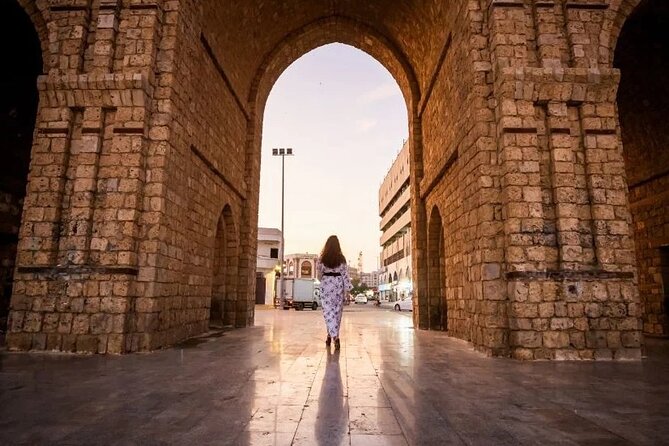
Bab Jadeed is the starting point for the walking section. From here, the old buildings make an immediate impression. The opening part of the tour is useful because Ferial can give you a framework for what you are seeing before you get deeper into the district.
I like beginning at an entrance rather than meeting in the middle of a market. It helps you understand Albalad as a historic quarter with its own edges, routes, and layers. You are not simply being shown a collection of attractive façades.
The pace should also suit people who want to stop and look. One of the strongest features of this tour is the attention given to architecture. You have time to pause while Ferial explains the buildings and their place in local and national culture.
The old town is not a polished outdoor museum. That is part of its appeal, but it also means conditions can feel uneven. You may find worn surfaces, tight lanes, and active local businesses alongside restored buildings. Comfortable shoes are a sensible choice, and you should be prepared to walk slowly rather than cover a large distance.
Biet Nassif, Albalad’s important house
Biet Nassif is one of the key stops. It is described as one of the most important houses in Albalad, so this is where the tour’s architectural focus becomes more specific.
A house like this helps you see that old Jeddah is not only about mosques and market streets. Homes also tell the story of status, family life, design, and the way people adapted to the city. Ferial can connect the details of the house to the broader story of Saudi Arabia, giving the building more meaning than a quick photograph would provide.
Give yourself time here. Look at the exterior details, the proportions of the building, and the wooden features. The old wooden latticework is a recurring part of the district’s character, and one guest described being taken inside to see a craftsman working on this traditional form.
That kind of access is one reason a local guide can be worth paying for. A door that looks closed or unimportant from the street may lead to a café, a workshop, or another part of local life. You should not expect every visit to follow exactly the same path, but Ferial’s familiarity with the area can help you notice more than you would alone.
A few more Jeddah half-days to weigh up
- Jeddah: Bayada Leisure Boat Trip with Snorkeling
★ 4.3 · 138 reviews - Historical & Heritage Tour in Jeddah Al Balad
★ 5.0 · 57 reviews - Jeddah: Al-Balad Old Town Tour with Guide
★ 4.7 · 43 reviews - Jeddah Desert Safari: Quad Biking, Camel Farm & Sunset Views
★ 4.9 · 37 reviews
Al Shafei Mosque in the narrow lanes
Al Shafei Mosque is situated in the narrow alleys of old Jeddah. Its setting matters as much as the stop itself. You reach it through the close-packed lanes that give Albalad its particular feel.
A guide is especially helpful here because the route can be confusing for someone seeing the district for the first time. Ferial can explain the mosque’s place within the old quarter while helping you understand how religious buildings fit into the surrounding streets.
The stop is not presented as a long formal visit with a detailed list of religious rules. Instead, it forms part of a broader walk through Jeddah’s culture and built environment. If you are interested in architecture, local traditions, or the way historic neighborhoods function, this is a useful part of the route.
As with any mosque visit, dress and conduct should be respectful. The supplied information does not give a specific dress code or opening schedule, so ask Ferial about current access on the day of your tour.
Cafés, food, and the changing evening mood
The tour can include local drinks and Saudi food from the souk. Restaurant suggestions are also included, which is practical if you want to continue eating in Albalad after the formal three hours end.
This food element helps keep the experience grounded. You are not only hearing about the old town from a historical distance. You may taste something local, enter a small café, or see how people use the district today.
One especially appealing detail is the change in atmosphere after sunset. A 5 pm start allowed one group to watch Albalad wake up around 6 pm, as lights appeared and more people came into the streets. That makes late afternoon a smart time to consider, particularly if you want cooler conditions and a livelier finish.
The exact starting time depends on availability, so you should check before booking. A late start may be more comfortable in warm weather, but it also means less daylight for seeing building details. If photography is important to you, ask about the day’s timing and the planned balance between daylight walking and evening atmosphere.
Traditional craft behind an unmarked door
One of the most memorable possibilities on this tour is finding working local spaces that are easy to miss. A door may open into a Saudi café or a workshop where someone is making traditional wooden latticework.
This is a good example of what you are paying for. A map can take you to Albalad, but it cannot always tell you which doorway is active, which shop is worth entering, or how to approach a local craftsperson respectfully.
You should treat these moments as opportunities rather than guaranteed performances. The information confirms that such places have been part of the experience, but it does not promise a particular café, craftsman, or workshop on every departure.
That uncertainty is not a weakness. In an old neighborhood, local access can change with opening hours and daily activity. The value comes from having Ferial nearby to interpret what you find and help the visit feel natural rather than intrusive.
What the three-hour schedule feels like
The experience lasts three hours. The time is divided into roughly 1.5 hours in Jeddah and 1.5 hours of guided touring, though the practical flow includes hotel pickup, the drive past the flagpole, and the walk through Albalad.
You should think of this as a focused introduction, not a full-day exploration of every part of Jeddah. The schedule gives you enough time for the main historic sights, architectural explanations, food or drink, and a taste of evening life without taking over your entire day.
For a one-day stopover, the format works well. One group used the tour during a one-day layover and found it a good way to spend the available time. Hotel pickup is particularly useful when you have limited hours and do not want to solve local transport before seeing the old town.
The tour is conducted in English. Since the focus is on explanation as well as sightseeing, you will get more from it if you ask questions about the buildings, customs, food, and present-day use of the area.
How Ferial shapes the experience
Ferial is the named guide and the central reason this is more than a basic walk through Albalad. She is a licensed or certified in-person guide, and the tour is led by a local woman in English.
Her approach appears to combine clear organization with flexibility. Meeting instructions are provided, and she sends a message to confirm the time. That small bit of communication matters when you are arriving in an unfamiliar city or fitting the tour around a flight.
The experience also gives you room to stop and explore. Ferial has been described as making sure there is enough time to admire the architecture rather than rushing from one address to another.
I would book this tour if you want history explained in plain language and prefer an easy introduction to local culture. I would look elsewhere if you want a highly academic architectural tour, a long museum visit, or a packed itinerary with many separate attractions.
Is $120 per person good value?
At $120 per person, this is not the cheapest way to walk around Albalad. You are paying for a three-hour small-group experience, hotel pickup, an air-conditioned vehicle, an English-speaking licensed or certified guide, and local suggestions for food.
The group limit of seven improves the value. In a large coach group, questions and spontaneous stops can be difficult. Here, the format is closer to a personal introduction, even if other people share the tour.
The price is easiest to justify in three situations:
- You are visiting Jeddah for the first time and want cultural context.
- You have a short stopover and need transport and a clear plan.
- You want a female local guide who can help you enter places you might overlook alone.
It is harder to justify if you are already comfortable exploring old neighborhoods independently, have plenty of time, or mainly want free time for shopping and photography.
The food and café stops can add value, but they should not be treated as a full meal package. The included details mention local drinks, Saudi food from the souk, and restaurant suggestions, not a set menu or extensive tasting course.
Who should book this Albalad walk?
I think this tour suits couples, solo visitors, and small groups who want a calm introduction to Jeddah’s old town. It also suits people who prefer a guide who can explain social and cultural details, not just point out dates and building names.
It is a strong choice for a short visit. The hotel pickup and three-hour length keep the planning simple, while Bab Jadeed, Biet Nassif, Al Shafei Mosque, cafés, food, and craft spaces give you a varied look at Albalad.
Families and older visitors should consider the walking conditions carefully. The activity is listed as wheelchair accessible, but the historic alleys and cobbled streets may still require route planning. It is not suitable for people over 95 according to the stated conditions.
You can cancel up to 24 hours before the tour for a full refund, and the reserve-now, pay-later option keeps your plans flexible. Those terms are useful if your Jeddah schedule depends on flights or changing travel plans.
Should you book Ferial’s Jeddah tour?
Book it if you want local guidance over a checklist of sights. Ferial’s tour is strongest when she leads you into the texture of Albalad: an old house, a narrow mosque lane, a café behind a plain door, a craftsman at work, or a souk snack.
The price is high for three hours, so I would not choose it simply for transport. Choose it for the access, explanation, small group, and cultural focus. A late-afternoon start is worth considering because it can let you see the old town in daylight and then watch the streets take on an evening mood.
If that sounds like the way you want to meet Jeddah, this is a worthwhile first look at Albalad.
FAQ
Where does the walking tour begin?
The walking portion begins at Bab Jadeed in Albalad, also called Historical Jeddah or Jeddah Old Town.
Is hotel pickup included?
Yes. The experience begins with pickup from your hotel in a comfortable, air-conditioned vehicle, followed by the visit to Albalad.
How long does the tour last?
The total duration is three hours. The stated schedule includes about 1.5 hours in Jeddah and 1.5 hours of guided touring.
Who leads the tour?
The tour is led in English by Ferial, a local female guide. The guide is listed as licensed or certified.
How many people can join?
The activity is a small-group tour limited to seven participants.
Can I cancel or pay later?
You can cancel up to 24 hours in advance for a full refund. A reserve-now, pay-later option is also available, so you do not need to pay at the time of booking.
Just added around Jeddah
- Jeddah Airport to Medina Hotel Private Arrival Transfer★ 5.0 · 3 reviews
- Jeddah: Historic District Tour by a Local licensed Guide★ 5.0 · 3 reviews
- From Jeddah: Private Sea Trip to Bayadah Island★ 3.5 · 3 reviews
- Jeddah: Private Highlights Tour of Most Instagrammable Spots★ 5.0 · 4 reviews
- Half Day Jeddah Traditional City Tour★ 4.5 · 4 reviews
- Al Balad Old Town Tour in Jeddah Historical City★ 4.8 · 4 reviews
- Desert Safari with Quad Bike Tours Jeddah★ 4.0 · 5 reviews
- Historical and Heritage Tour in Jeddah★ 5.0 · 5 reviews
Jeddah Tours, compared.

Jeddah: Bayada Leisure Boat Trip with Snorkeling
Read our review →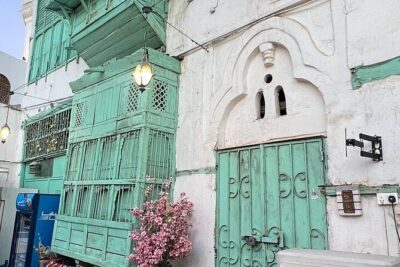
Historic District Tour in Jeddah by a Local Guide
Read our review →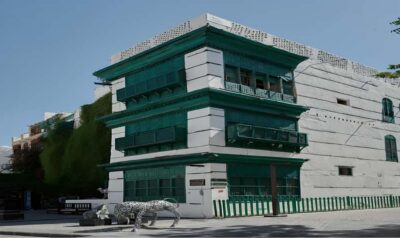

Jeddah Desert Safari: Quad Biking, Camel Farm & Sunset Views
Read our review →
Jeddah: Guided Snorkeling Trip with Snacks and Drinks
Read our review →
Browse the lists this tour appears in