Reviewed · WALKING TOURS
Walk In Moses’ Footsteps – Tour between Tabuk and The Red Sea
Jabal Al Lawz, the Red Sea coast, and the valleys around ancient Madyan form one of Saudi Arabia’s most unusual touring areas. This trip links those places to the Exodus story, taking you from a proposed Red Sea crossing point to Wadi Tayyib Al Ism, Jethro’s tombs, the Split Rock of Horeb, and the mountain many people identify as biblical Mount Sinai.
I like the private format, since your group of up to four can ask questions and set a comfortable pace. I also like the blend of desert scenery and biblical interpretation. You are not simply looking at ruins. You are hearing how local Bedouins understand the sites and how the guides connect them to the story.
The main caution is the price and physical demand. At $5,740 per group, this makes the most sense with four people, when the cost works out to $1,435 each. The three-day plan also includes long days in remote country, and the optional cave and summit climbs require strong fitness.
Key points at a glance
- Follow a Red Sea to Mount Horeb route: The journey links Haql, Wadi Tayyib Al Ism, Madyan, Jabal Al Lawz, and Jebel Maqla.
- See places tied to the Exodus story: Stops include a proposed crossing point, Moses’ oasis, Jethro’s tombs, the Split Rock, and sites associated with the Golden Calf.
- Travel privately with a small group: Only your party participates, with pickup offered and the day beginning at 7:00 a.m.
- Expect desert meals and possible camping: Two breakfasts, two dinners, and three lunches are included. Camping styles can vary, so confirm the exact setup.
- Plan for moderate walking and climbing: The main route suits people with moderate fitness. Elijah’s cave and the Jebel Maqla summit are much harder.
- Visit with an open mind: The biblical identifications are beliefs and interpretations, not settled archaeological facts.
Why this Saudi Arabia tour is different
Most sightseeing around Tabuk focuses on scenery, new development, or well-known archaeological sites. This journey has a more specific purpose: it asks you to look at the region through the story of Moses and the Exodus.
That makes the experience especially appealing if you grew up with these stories or have studied the possible routes across the Sinai and northwest Arabia. You will see the physical features that give the theories their appeal: a dramatic sea crossing point, water in dry country, huge rock formations, ancient carvings, and high mountain terrain.
The guides do not present every claim as established fact. The tour explains what local Bedouins believe and shares the conclusions reached through ongoing research in the region. I would keep that distinction in mind. You can find the sites moving and thought-provoking without treating every biblical connection as proven.
The strongest part of the experience is the setting. In a classroom, the Exodus can feel distant. Here, you can stand beside a desert well, walk beneath towering rock walls, and look across the Red Sea while considering how people might have moved through this country centuries ago.
More walking tours in Saudi Arabia:
- Historical Riyadh Self-Guided Audio Walking Tour
★ 3.5 · 11 reviews - Jeddah historical Walking Tour AL-Bald
★ 4.5 · 8 reviews - Prophet’s Mosque Walking Tour with Historic Hejaz Railway
★ 4.7 · 4 reviews
Day one: from Tabuk Airport to the Red Sea
The trip begins with pickup at Tabuk Airport, followed by the journey toward the coast. The listed meeting point is the Hilton Garden Inn Tabuk on Prince Sultan Road, and the scheduled start is 7:00 a.m. Confirm the pickup details in advance, especially if you are arriving at the airport rather than staying at the hotel.
Haql and the proposed Red Sea crossing
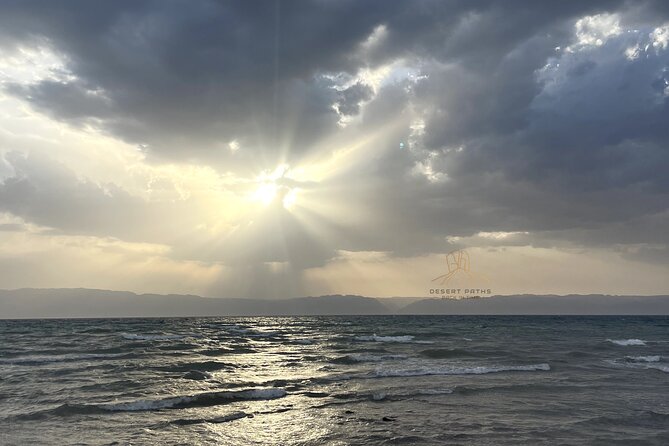
Haql is presented as the Saudi side of a possible Red Sea crossing, facing Nuwaiba Beach across the water. You spend about three hours in the area, taking in the coast and discussing the Exodus theory connected with this point.
The appeal here is immediate. The Red Sea is not an abstract line on a map. It is right in front of you, with clear water and broad coastal views. The guide’s explanation gives the scenery a story, even if you remain uncertain about the exact historical route.
Do not expect a conventional archaeological attraction with a visitor center or a long list of confirmed remains. The value is the combination of location, conversation, and setting. Bring sun protection, water, and a hat. The open coast offers little shelter.
Wadi Tayyib Al Ism, a desert oasis
The next stop is Wadi Tayyib Al Ism, described as the Elim oasis where Moses and his people camped after leaving Mara. You have around four hours here, making it one of the more substantial visits on the first day.
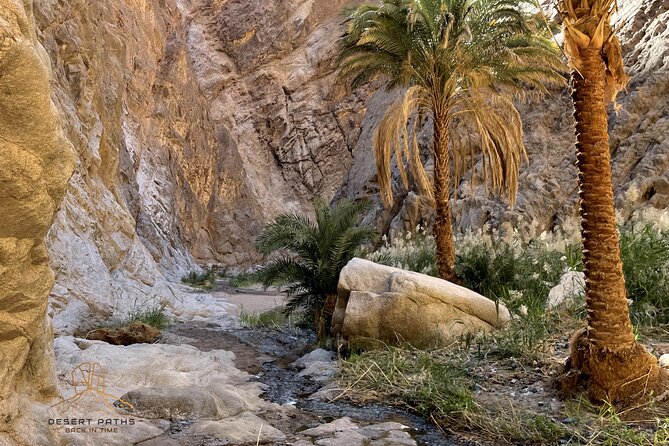
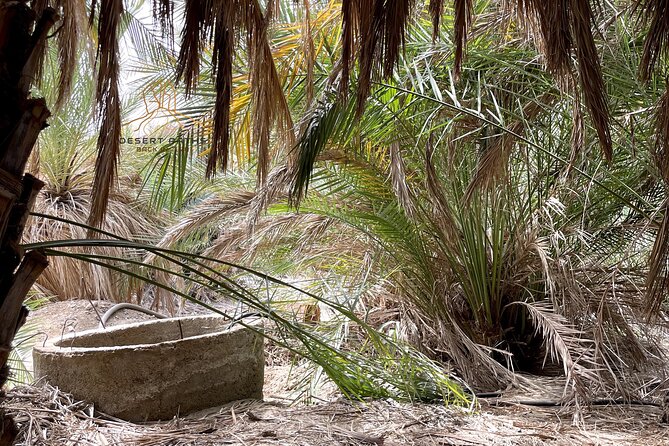
The valley is known for tall rock walls, greenery, date palms, wells, and clear pools. The government has preserved several wells for local Bedouins to water their animals. That practical use gives the site a living quality. It is not just a scenic stop labeled with an ancient name. It remains part of the region’s everyday life.
I would expect this to be one of the most relaxing sections of the tour. After the coast and the drive from Tabuk, the shade and water offer a welcome change. You can look closely at the rock formations, walk through parts of the valley, and hear how the guide relates the oasis to the Exodus account.
The terrain can still be uneven, and desert heat changes the experience quickly. The suggested February and March timing is worth noting. June has been described as too hot for comfort, so I would avoid the hottest part of the year unless you handle intense heat well.
Same city, a completely different day out:
- Riyadh: Edge Of The World, camels &Stargazing with 4×4
★ 4.7 · 1,050 reviews - Dubai: Desert Safari Camel Riding, Sandboarding & BBQ Dinner
★ 4.8 · 846 reviews - Edge of The World Riyadh with Camel Ride ,Bat Cave Visit & Dinner
★ 5.0 · 778 reviews - Riyadh: 4×4 Trip to the Edge of the World at Sunset
★ 4.9 · 719 reviews
Day two: Madyan, tombs, and water wells
Day two shifts from coastal scenery to the historic area around Al Bad’, known locally in connection with ancient Madyan. The area is linked with Jethro, Moses’ father-in-law, and with the period when Moses lived in Midian.
Jethro’s tombs and the well of Moses
The rock-cut tombs are compared with Petra in Jordan and Mada’in Saleh in Saudi Arabia. One cave is believed to be Jethro’s tomb, though the identification is part of the area’s tradition rather than a confirmed fact presented here.
The site works best for people who enjoy combining physical remains with oral history. Your guide can explain the local beliefs and the biblical connections, while the carved stone gives you something tangible to examine.
You also visit a well associated with Moses helping Jethro’s daughters water their sheep. The story says this may have been where Moses met Sephora, who became his wife. Again, the power of the stop comes from standing in a real place tied to a familiar story, not from a museum display proving every detail.
Allow about three hours. Wear shoes with a firm grip, since the experience includes caves and rocky ground. You may also want a scarf or hat for shade and protection from dust.
The Split Rock of Horeb and nearby petroglyphs
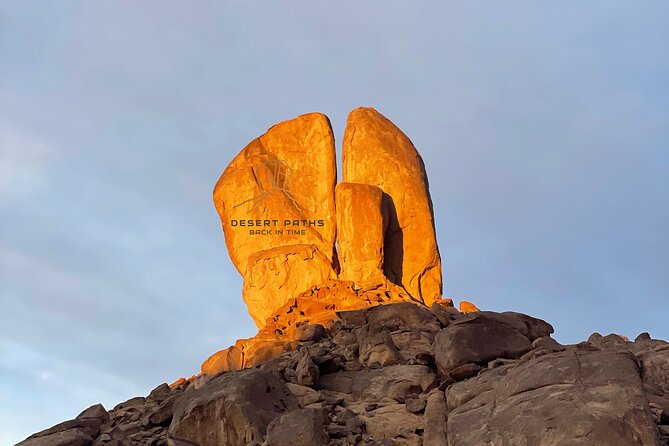
The Split Rock of Horeb is reached in the Rephidim area. According to the story, Moses struck a rock and water came out for the people. The tour includes a climb up to the rock and takes about two hours.
This is one of the clearest examples of how the experience blends geology, faith, and interpretation. The split rock is visually striking, but the guide’s account is what gives it meaning. You can compare the biblical description with the shape and position of the stone, then decide how persuasive you find the connection.
A short drive takes you to black stones on a hill marked with ancient petroglyphs. The carvings include bulls, people, and animals. The site is linked to the hill where Moses may have stood with his hands raised while Joshua fought the Amalekites below.
Petroglyphs can be easy to miss in harsh light, so listen closely to the guide and take time to study the stone surfaces. This is not a polished attraction. It is a remote place where the story depends on careful observation and explanation.
Day three: Jabal Al Lawz and the Golden Calf sites
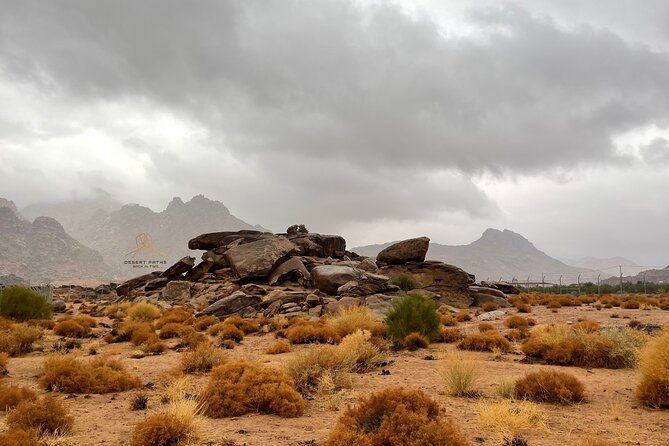
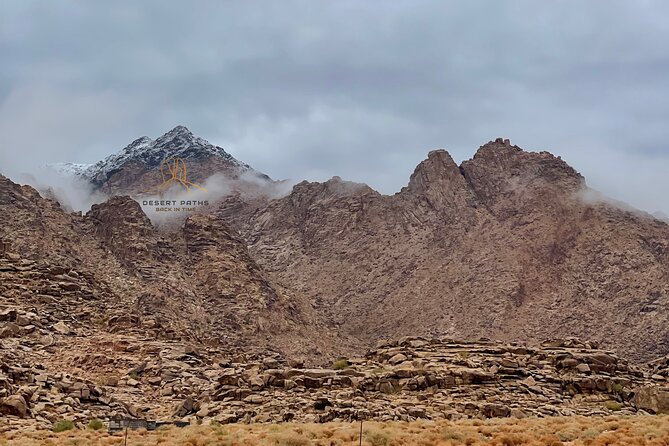
The third day centers on Jabal Al Lawz, including the peaks of Al Lawz and Maqla. This is the section most closely tied to the proposed Mount Sinai or Mount Horeb theory.
The mountain camp and twelve pillars
Near the mountain, you see an area identified as the camp where Moses and his people stayed. The route also includes a rough-stone altar and the remains of columns associated with the twelve pillars Moses erected before climbing the mountain.
The plain construction matters here. The altar is described as being made from rocks that were not chiseled, which fits the biblical instruction emphasized by the tour. You can examine the stones and the surrounding terrain while the guide explains how the site fits the larger theory.
The setting is stark and memorable. The mountain rises from a broad desert region, and the lack of modern development helps you picture why this place has attracted so much attention. At the same time, you should understand that the proposed identification of Jabal Al Lawz as Mount Sinai remains disputed. This is an interpretive tour, not a settled archaeological field trip.
The Golden Calf altar and ancient graveyard
A nearby group of huge stones is associated with the altar Aaron built before the Golden Calf. Carvings of bulls, people, and animals appear on the stones. The tour then continues to an ancient graveyard believed to be connected with the punishment of about 3,000 people after the Golden Calf episode.
The two stops add depth to the mountain visit. Instead of seeing one isolated peak, you are shown a series of places that supporters believe fit the sequence of events: camp, altar, mountain, carvings, and graves.
The schedule lists several Jabal Al Lawz visits, with about three hours for the main mountain area and another two hours for the altar and pillars. That makes for a full day when driving and meals are added. Pay attention to the pace and keep water with you.
Optional climbs to Elijah’s cave and Jebel Maqla
The standard route is already active, but you can add a half day to climb to what is believed to be Elijah’s cave. The climb takes about five hours, and it is recommended only for people with strong physical fitness.
You can also add another day to climb toward a peak of Jebel Maqla. This is listed as a ten-hour activity, again for fit participants. You may camp at the mountain or return to Tabuk for the night, depending on the arrangement.
These additions are not casual walks. Ask the operator about the exact route, starting point, water arrangements, camping plan, and weather before committing. The supplied information does not state an extra price, so you should request the cost when booking.
If you choose an extension, expect the trip to become a serious outdoor expedition rather than a simple sightseeing tour. The reward is more time in the mountain country and a closer connection with the central Mount Horeb theory. The tradeoff is a harder physical effort and less time for rest.
Guides, meals, and desert nights
Desert Paths uses a team that has included guides named Gabriel and Abdelaziz, along with local partners such as Abdo, Mamdu, and Mshali. The important thing for you is the mix of biblical explanation, desert navigation, and local knowledge.
The guiding style is described as friendly, patient, and willing to answer questions. That matters on a tour built around contested interpretations. You want a guide who can explain the belief behind a site without forcing you to accept every conclusion.
Food is part of the experience. The three-day plan includes two breakfasts, two dinners, and three lunches. Previous arrangements have included traditional Saudi meals and simple cooking over an open flame during desert camping.
Camping options have included Bedouin, Modern, and VIP styles. The Bedouin option is the more basic choice, with tents and meals prepared in the desert. Because the exact accommodation details are not fully stated, ask what is included in your selected style before paying.
Dietary requests such as vegetarian, vegan, and gluten-free meals can be accommodated in some cases. Add your needs to the booking notes and confirm them directly.
What $5,740 buys you
The price is $5,740 per private group of up to four. Split four ways, that is $1,435 per person. For two people, the cost rises to $2,870 each, so the group size makes a major difference.
You are paying for a private three-day route through remote areas, airport or hotel pickup, guiding, transport between widely spaced sites, and seven included meals. The price also reflects the planning needed for a region where independent access may be difficult.
I see better value here for a full group of four than for a couple. Four friends or family members who already share an interest in biblical history can make the cost easier to justify. If you are mainly looking for mountain scenery, the price may feel high compared with a shorter Tabuk excursion.
Tips are not included, but they are optional. Free cancellation is available up to 24 hours before the start time. Within 24 hours, you do not receive a refund. Poor weather or failure to reach the minimum number of participants can lead to a new date, a different experience, or a full refund.
Who should book this experience
I would choose this tour if you want a focused story, remote desert scenery, and plenty of time with a private guide. It suits people with moderate fitness who are comfortable with rocky ground, early starts, long drives, and heat.
It is also a good choice for a small group that wants more than a standard sightseeing circuit. The combination of Red Sea views, oasis scenery, caves, tombs, petroglyphs, and mountain sites gives the trip real variety.
I would hesitate if you dislike religious interpretation, expect firm archaeological proof, or want a relaxed holiday. The itinerary is active, the main evidence is debated, and the optional climbs can be demanding.
FAQ
Where does the tour begin?
The listed meeting point is the Hilton Garden Inn Tabuk at 7701 Prince Sultan Road in Tabuk. Pickup is offered, including pickup from Tabuk Airport, and the scheduled start time is 7:00 a.m.
How long does the experience last?
The main experience lasts approximately three days. You can add a half day for the climb to Elijah’s cave or another day for a climb toward a peak of Jebel Maqla.
Is this a private tour?
Yes. Only your group participates, with a maximum of four people per booking.
What meals are included?
The price includes two breakfasts, two dinners, and three lunches. Dietary requests such as vegetarian, vegan, and gluten-free meals can be accommodated in some places if you provide the information when booking.
How fit do I need to be?
The main trip requires a moderate level of physical fitness. The optional climb to Elijah’s cave and the climb toward Jebel Maqla require strong physical fitness.
Are the biblical site identifications proven?
The tour presents these places as proposed locations connected with the Exodus story and explains local Bedouin beliefs and ongoing research. The information provided does not establish the identifications as settled archaeological fact.
Can I cancel for a full refund?
You can cancel at least 24 hours before the local start time for a full refund. Cancellations or changes made within 24 hours are not accepted for a refund. If poor weather or insufficient bookings cause the operator to cancel, you are offered another date, another experience, or a full refund.
Should you book Walk In Moses’ Footsteps?
Book it if the story of Moses matters to you and you want to consider the Saudi Arabia theory on the ground. The Red Sea, Wadi Tayyib Al Ism, Madyan, the Split Rock, and Jabal Al Lawz create a powerful three-day route, especially with a skilled guide and a small private group.
Before booking, gather three or four people to share the cost, choose a cooler season such as February or March, and ask for exact details on camping, transport, and optional-climb pricing. Go with curiosity rather than certainty. You may not leave convinced that Jabal Al Lawz is Mount Sinai, but you will have seen a remarkable corner of northwest Saudi Arabia and understood why the theory continues to attract serious interest.
Just added around Saudi Arabia
- Coffee and Tea Party in Aljadidah★ 3.5 · 3 reviews
- Al-Ula: Guided Horse Riding★ 5.0 · 3 reviews
- Riyadh: Full Day City Tour Guided with Transport★ 4.8 · 3 reviews
- Explore Edge of The World in a Private Trip with Saudi Dinner★ 5.0 · 3 reviews
- Edge of the World Tour★ 5.0 · 3 reviews
- Jeddah Airport to Medina Hotel Private Arrival Transfer★ 5.0 · 3 reviews
- Jeddah: Historic District Tour by a Local licensed Guide★ 5.0 · 3 reviews
- Riyadh: King Fahad National Library Guided Tour★ 4.5 · 3 reviews
Walking Tours, compared.