
Reviewed · DIRIYAH & HISTORIC RIYADH TOURS
Riyadh : Diriyah Historic
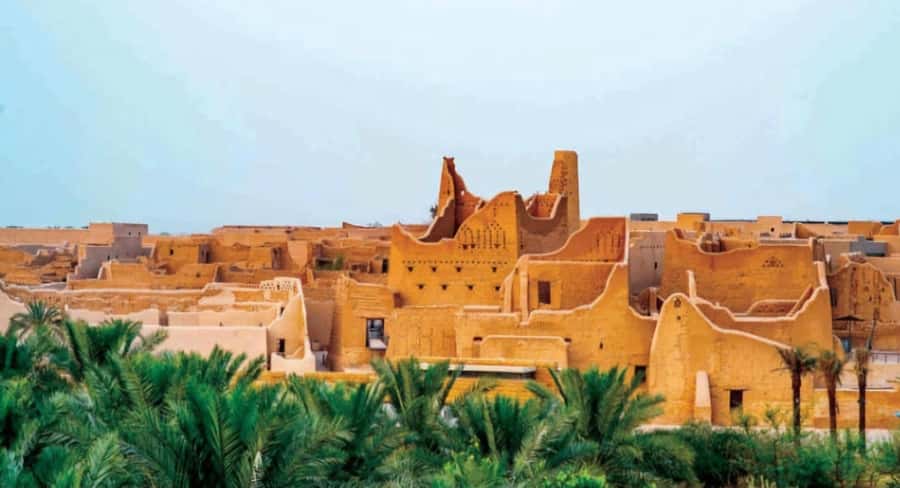
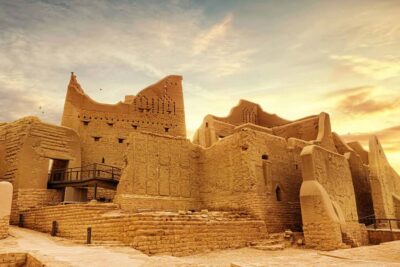
Diriyah is where Saudi Arabia’s story takes physical shape: mudbrick walls, old lanes, and At-Turaif, the former capital of the first Saudi State. This three-and-a-half-hour outing from Riyadh gives you a clear introduction to the kingdom’s origins, with time for Bujairi Terrace and its modern take on Najdi culture.
I like the small group size, limited to six, because it makes it easier to ask questions about religion, architecture, and daily life. I also like the human touch: guides including Mohammed and Sarah have helped visitors finish with Arabic coffee, dates, local foods, and a view across the historic district.
The main drawback is the short sightseeing window. The scheduled visit in Diriyah is about 1.5 hours, while the full experience lasts 210 minutes, so you should not expect an unhurried, museum-by-museum exploration. Riyadh’s heat and the amount of walking also make good shoes, water, and sun protection essential.
Key points at a glance
- At-Turaif dates from the first Saudi State: Explore the UNESCO-listed mudbrick district recognized in 2010.
- A small group means more conversation: The maximum group size is six people.
- Mohammed and Sarah guide in Arabic or English: Their tours focus on Diriyah’s history, culture, religion, and architecture.
- Bujairi Terrace adds a modern cultural stop: Expect dining, heritage settings, Arabic coffee, dates, and local foods.
- Pickup and drop-off can be arranged: This is useful in spread-out Riyadh, where getting to Diriyah independently may take planning.
- The tour costs $195 per person: The price makes the most sense if you value a private-feeling group, local guidance, and arranged transport.
Why Diriyah matters to your Riyadh visit
You can see plenty of polished new development in Riyadh, but Diriyah gives you a different key to the country. It connects the present-day Kingdom with the town that became the capital of the first Saudi State.
Diriyah was established in 1446 AD beside Wadi Hanifah. Its position near the valley helped shape the town’s identity and settlement pattern. The old district was built largely from mudbrick, a material suited to the local climate and traditional building methods.
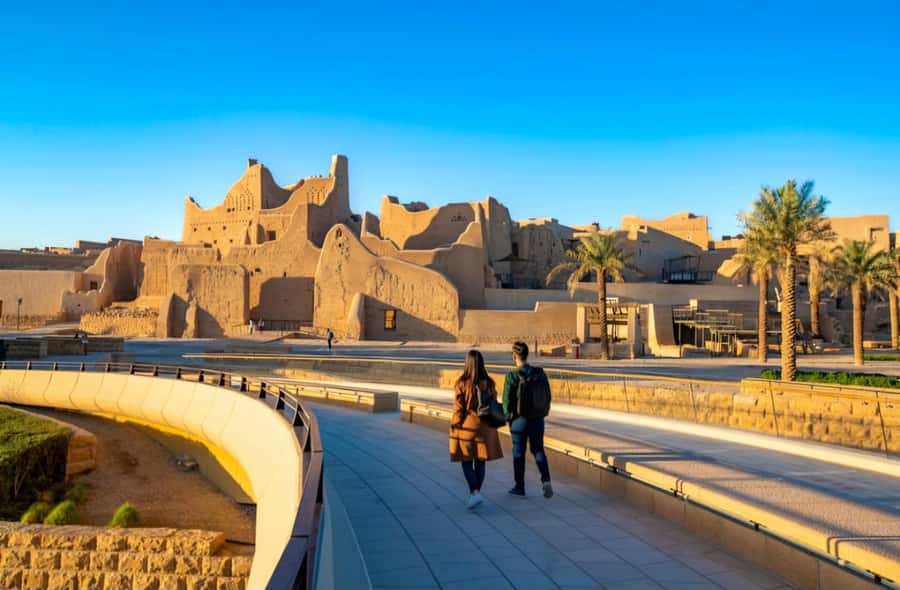
At-Turaif is the essential stop. UNESCO added the district to its World Heritage list in 2010 because of its historical and architectural importance. You are not simply looking at old walls here. You are walking through the former political center of the first Saudi State, where the scale and layout of the buildings help explain how Diriyah functioned.
That context is what makes a local guide useful. Without explanation, mudbrick ruins can blur into one another. With Mohammed or Sarah, you can ask why the city mattered, how the first Saudi State developed, and what the surviving buildings and displays tell you about the past.
More Historical Tours in Riyadh
- Red Sand Adventure 4×4 (Camel Ride ,Quad Biking, Heritage House)
★ 5.0 · 135 reviews - Red Sand Adventure Riyadh (Quad Biking,Camel Ride,Heritage)
★ 4.6 · 19 reviews - Red Sand Dunes Tour with Camel Ride ,Quad Biking, Heritage House
★ 4.0 · 16 reviews
From Riyadh to the mudbrick heart of At-Turaif
The experience begins with pickup in Riyadh, arranged with the operator. That detail matters more than it may seem. Riyadh is a large city, and Diriyah lies northwest of the main urban area, so a planned transfer saves you the trouble of working out the route and meeting point yourself.
Once in Diriyah, the main focus is the At-Turaif district. The tour gives you around 1.5 hours for the visit, so expect a guided overview rather than unlimited time to explore every corner.
The old streets and heritage landmarks are the main attraction. Mudbrick construction gives the district a warm, earthen color, while the compact form of the old city helps you picture Diriyah as a working capital rather than a decorative ruin.
I would listen closely during this part. The value is not just in taking photographs of walls and towers. Your guide can connect the buildings to the formation of the first Saudi State, explain the role of the district, and point out details you might otherwise pass without noticing.
The short schedule does require discipline. If you like reading every sign, lingering over artifacts, or stopping repeatedly for photographs, you may feel pressed. If you want a clear first look at Diriyah with a guide who can organize the story, the pace should work well.
At-Turaif’s UNESCO setting and historic displays
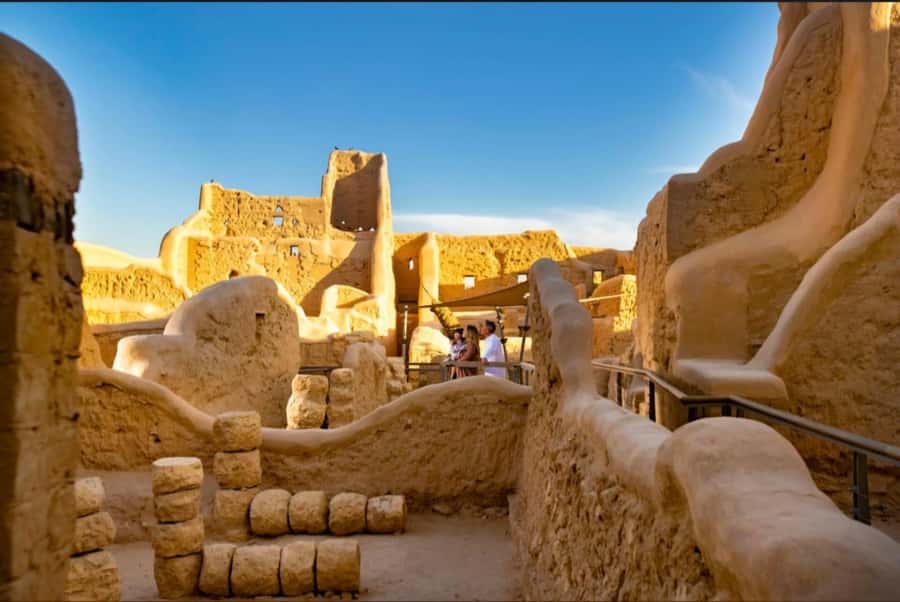
At-Turaif is the part of the visit with the greatest historical weight. Its UNESCO recognition gives you a useful frame, but the district is best understood through its relationship to the founding story of Saudi Arabia.
The mudbrick city served as the capital of the Emirate of Diriyah, also described as the first Saudi State. That makes this more than a general heritage stop. You are visiting a place tied directly to the country’s political beginnings.
Displays of artifacts are also part of the experience. William, a visitor from the United States, particularly valued the explanations of the various objects on display. That suggests you should not rush past the exhibit areas. Objects can put everyday life and political history into more concrete terms than architecture alone.
The guide’s role is especially important for first-time visitors to Saudi Arabia. Mohammed and Sarah have been praised for explaining culture, religion, and history in an approachable way. You can use the walking time to ask practical questions and gain context that a signboard may not provide.
Dress modestly and respectfully, especially around religious sites. This is not only good manners. It also helps you move through the historic setting with the right attitude.
Bujairi Terrace, Arabic coffee, and a change of pace
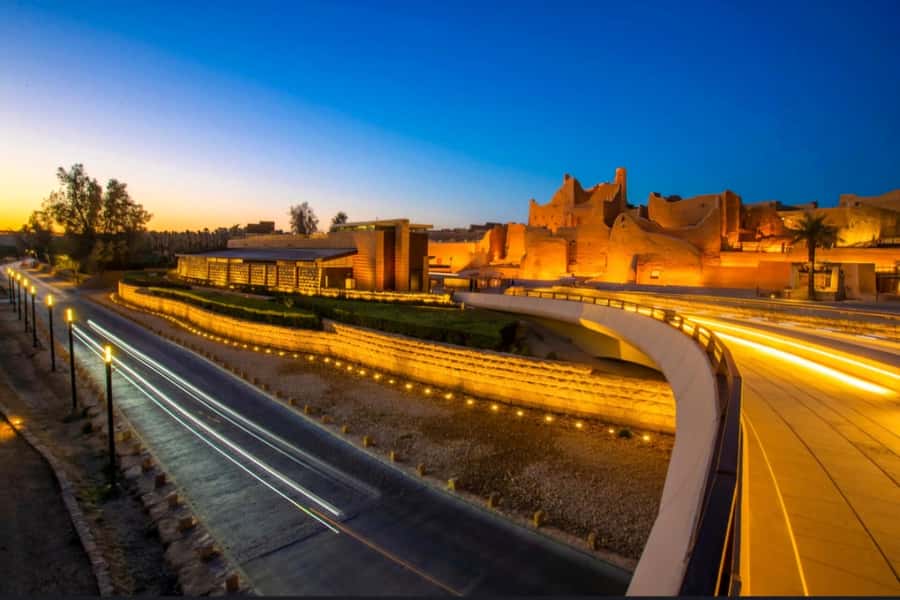
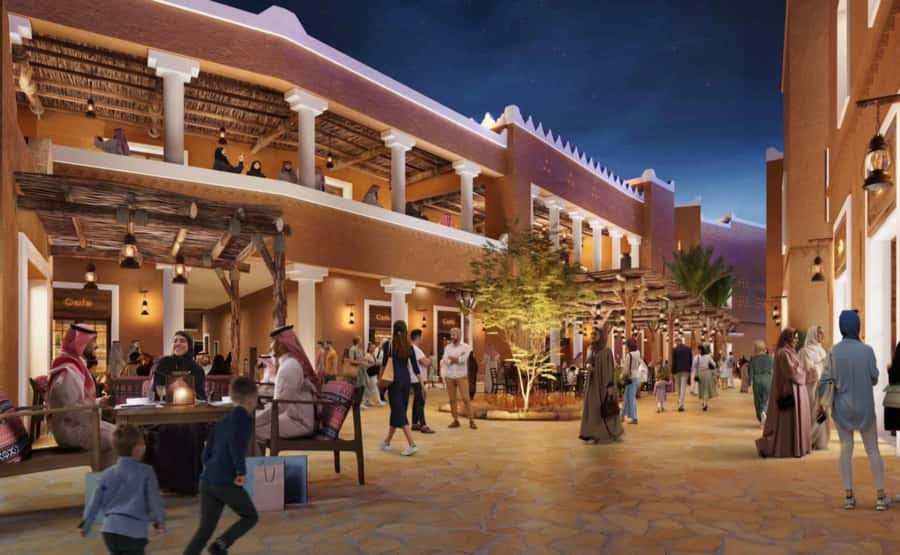
After the historical section, Bujairi Terrace offers a different mood. It is presented as a place for culture, dining, and heritage, so it works as a bridge between old Diriyah and the modern visitor experience.
You might find the contrast striking. At-Turaif gives you the former capital in mudbrick; Bujairi Terrace gives you a more polished setting where you can pause, eat, and enjoy the surroundings. It is not a substitute for the old district, but it helps show how Diriyah is being presented as a major cultural destination.
A particularly pleasant feature is the chance to enjoy Saudi coffee and dates. One tour also included local foods and free time in the Bujairi area. These small details matter because they turn the visit from a purely visual sightseeing stop into a chance to experience part of Saudi hospitality.
Do not expect the food element to function as a full meal unless your booking specifically says so. The information provided confirms coffee, dates, and local foods as part of the experience described by one visitor, but it does not promise a set meal or restaurant reservation.
Bujairi Terrace may appeal most to you if you want a comfortable ending after walking through At-Turaif. It also gives you time to take in views and talk with your guide without standing in the middle of a narrow historic lane.
More Diriyah and historic Riyadh visits:
- Diriyah Tour with Traditional Dinner
★ 5.0 · 37 reviews - Al Masmak Fortress, Murabba Palace, and Souq Al Zal Tour
★ 5.0 · 19 reviews - From Riyadh: Diriyah UNESCO Heritage Tour
★ 3.7 · 11 reviews - Riyadh: Masmak Fort, Souq AlZal, and Murabba Palace Tour
★ 4.8 · 7 reviews
Hanifa Valley and the wider setting
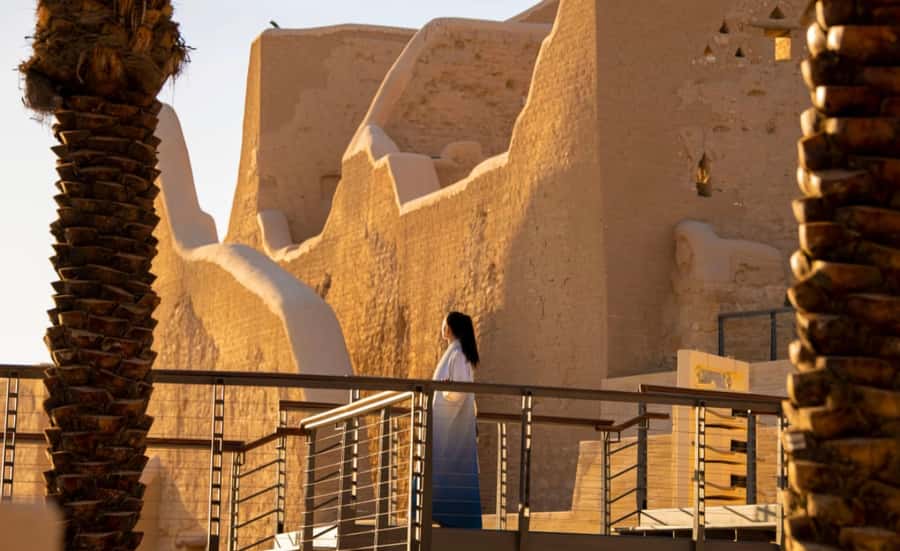
Diriyah’s location beside Wadi Hanifah is part of its story. The valley gives the town a natural setting and helps explain why this location mattered when the settlement was established.
The tour highlights scenic Hanifa Valley, though the supplied schedule does not give a separate stop length or a detailed route through the valley. Think of it as part of the wider Diriyah setting rather than a guaranteed long nature walk.
You may get your best sense of the area from viewpoints around the historic and cultural districts. Bring sunglasses, a wide-brimmed hat, and a charged phone if you want to take photographs. A battery pack is sensible because the tour combines outdoor walking, old buildings, and scenic views.
The weather can shape your experience. Riyadh may be hot during the day and cooler at night, so check the forecast and dress in layers when appropriate. Sunscreen and water are not optional extras in the warmer months.
Bab Samhan and the Najdi feel
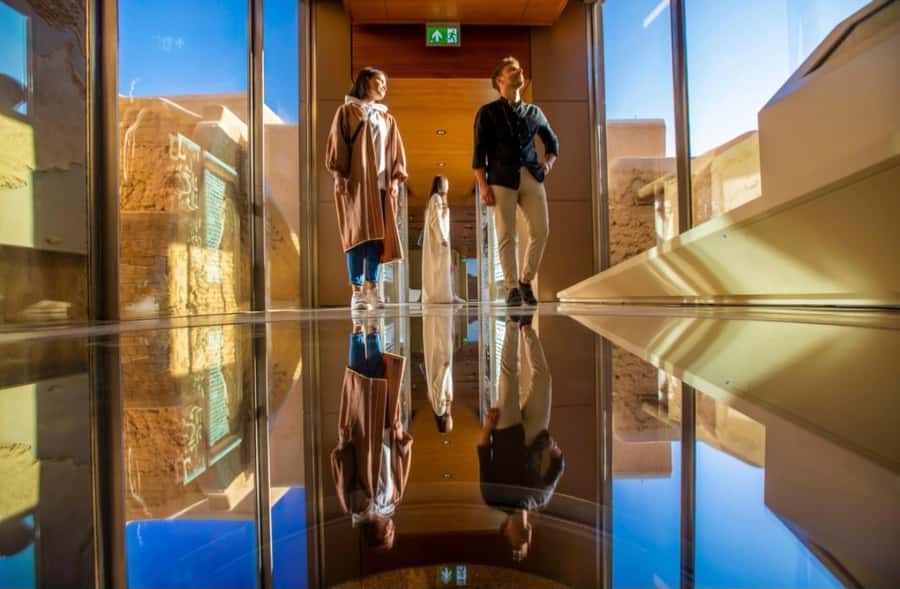
Bab Samhan Hotel is included among the highlighted places, described as an authentic Najdi experience. The available information does not give a precise activity or visit length there, so I would treat it as part of the Diriyah atmosphere rather than assume a formal hotel tour.
The name points you toward the local architectural character that runs through the experience. Najdi design, mudbrick construction, heritage settings, and Saudi hospitality all help tie the separate stops together.
This is one reason the tour works better as a cultural introduction than as a simple sightseeing transfer. You move from political history at At-Turaif to food, coffee, hospitality, and contemporary heritage presentation at Bujairi Terrace and the surrounding Diriyah area.
What the $195 price buys you
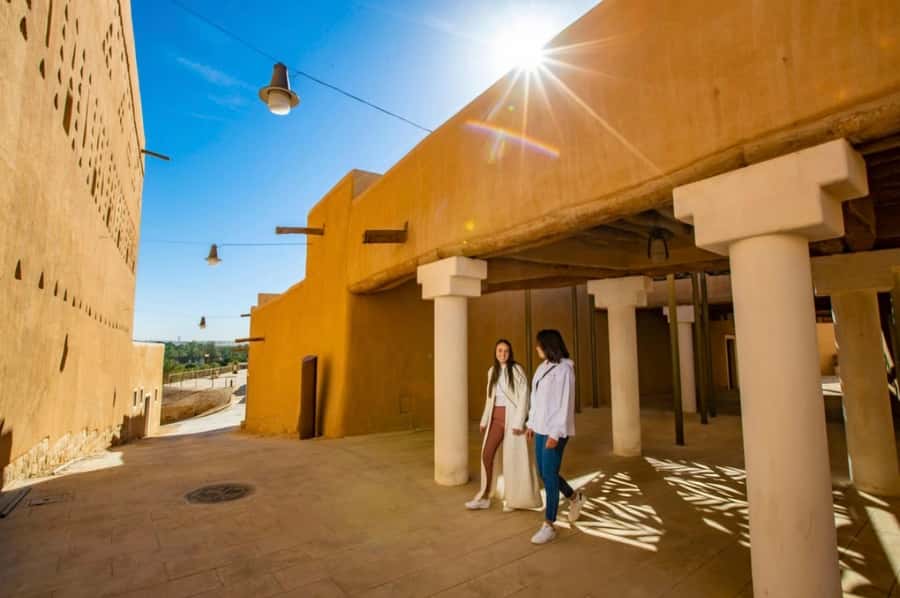
At $195 per person, this is not a budget outing. The value depends on how much you want arranged support and personal explanation.
You receive a local expert guide, pickup and drop-off upon arrangement, water, and a small group limited to six. If you are staying in Riyadh and do not want to organize transport, find the right entrance, and piece together the history alone, those services have real value.
The group limit is particularly important. Six people is small enough for direct conversation, and you are less likely to lose your guide in a large crowd. The strong praise directed toward Mohammed and Sarah centers on their kindness, preparation, communication, and ability to explain the culture and history. Those qualities can make a major difference at a site where context matters.
The price is harder to justify if you only want a quick photograph of At-Turaif. You may prefer to arrange a less costly visit if you are comfortable handling transport and exploring without much explanation. But if this is your first visit to Saudi Arabia, the combination of logistics, a local guide, and a small group makes the cost easier to defend.
Free cancellation up to 24 hours before the activity and the reserve-now, pay-later option also reduce the financial risk when your Riyadh plans are still moving around.
Walking, clothing, and practical preparation
Wear comfortable walking shoes. This is not a drive-by visit, and the old district is best appreciated on foot.
Choose comfortable, modest clothing. Respectful dress is especially important around religious sites and traditional areas. You do not need to treat the tour as a formal occasion, but avoid clothing that could be seen as careless in a conservative cultural setting.
Carry water, even though water is included. You should also bring sunscreen, sunglasses, and a hat, particularly during warmer months. A mobile battery pack will help if you use your phone for photographs or translation.
Alcohol and drugs are not allowed. Respect local customs, including accepted norms around greetings and personal interaction.
The tour is offered in Arabic and English. If you want detailed explanations, make sure you select the language that lets you ask questions comfortably.
Who will get the most from this tour
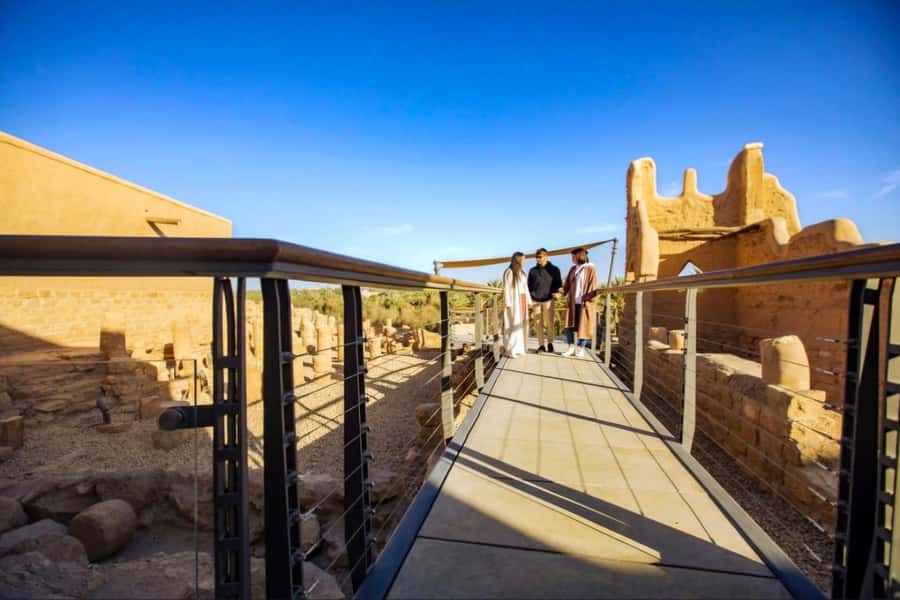
I would recommend this experience to first-time visitors who want a readable introduction to Saudi history without spending an entire day on the road. It suits anyone curious about the first Saudi State, traditional architecture, local culture, and the connection between old Diriyah and today’s Saudi Arabia.
It is also a good fit if you prefer a small group. The limit of six gives the outing a more personal feel than a large coach tour, and the guides can respond to individual questions.
Couples, solo visitors, and small families with older children should find the format manageable, provided everyone is comfortable walking and dealing with the heat. The activity is not suitable for babies under one year or people over 95 years, according to the stated restrictions.
I would hesitate to recommend it to you if your priority is a long, slow archaeological visit. The total duration is 210 minutes, but the Diriyah sightseeing portion is listed as about 1.5 hours. You will see the main highlights, yet you may not have time for every building, display, and photo stop.
The guide can make or break the visit
The strongest part of this experience is the guide-led storytelling. Mohammed is described as pleasant, kind, professional, and strong at explaining Diriyah’s history and artifacts. Sarah is praised for making visitors feel welcome and for explaining culture and history clearly.
Those personal details are useful when choosing this kind of tour. Diriyah’s importance is not always obvious from its appearance. A guide who can explain the religious, political, and architectural background turns a walk through old mudbrick buildings into a meaningful visit.
You should ask questions. Ask about the first Saudi State, the role of At-Turaif, Najdi architecture, the relationship between Diriyah and Riyadh, and the customs connected with coffee and dates. The small group format gives you a better chance to have that conversation.
Should you book the Diriyah Historic tour?
Book it if you want a well-organized introduction to Saudi Arabia’s birthplace, prefer a group of no more than six, and value local explanation over independent wandering. At-Turaif is the key reason to go, while Bujairi Terrace, Arabic coffee, dates, and Hanifa Valley add cultural and scenic variety.
Think carefully about the price and pace. At $195, this is best for someone who wants pickup, a local Arabic or English-speaking guide, and a compact route through the major Diriyah highlights. If you want a full-day heritage visit with long periods inside museums or extensive walking through the valley, this three-and-a-half-hour format will feel limited.
For a first look at Diriyah from Riyadh, I would book it, especially if Mohammed or Sarah is available and you want the history explained rather than simply photographed.
FAQ
Where does the Diriyah Historic tour begin and end?
Pickup and drop-off are provided in Riyadh upon arrangement. The tour returns you to Riyadh.
How long does the activity last?
The full activity lasts 210 minutes, or three and a half hours. The Diriyah visit itself is listed as approximately 1.5 hours.
What is the price?
The listed price is $195 per person.
What places are included?
The experience highlights At-Turaif District, Bujairi Terrace, Hanifa Valley, and Bab Samhan Hotel. At-Turaif is a UNESCO World Heritage Site recognized in 2010.
Is the tour available in English?
Yes. Live guiding is available in Arabic and English.
How many people are in the group?
The activity is a small-group tour with a maximum of six participants.
What should I bring?
Bring comfortable walking shoes, modest and comfortable clothing, water, sunscreen, sunglasses, a wide-brimmed hat, and a mobile battery pack.
Can I cancel or pay later?
You can cancel up to 24 hours in advance for a full refund. You can also reserve now and pay later.
More Heritage Sites in Riyadh
- Historical Riyadh Self-Guided Audio Walking Tour
★ 3.5 · 11 reviews - Ushaiqer Heritage Tour from Riyadh with Dinner
★ 5.0 · 7 reviews - Half Day Tour Discovering the History of Riyadh
★ 5.0 · 6 reviews - Riyadh: Historical City Full-Day Guided Tour with Transport
★ 4.0 · 4 reviews
Just added around Riyadh
- Riyadh: Full Day City Tour Guided with Transport★ 4.8 · 3 reviews
- Explore Edge of The World in a Private Trip with Saudi Dinner★ 5.0 · 3 reviews
- Edge of the World Tour★ 5.0 · 3 reviews
- Riyadh: King Fahad National Library Guided Tour★ 4.5 · 3 reviews
- From Riyadh: Desert ATV Quad Bike Tour with Camel Ride★ 3.7 · 3 reviews
- Architectural Wonders of KAFD, An Iconic Destination★ 5.0 · 3 reviews
- Riyadh: Dining Experience at The Globe Restaurant★ 3.7 · 3 reviews
- Full-Day Ushayger Tour with Lunch from Riyadh★ 4.5 · 4 reviews
Diriyah & Historic Riyadh Tours, compared.
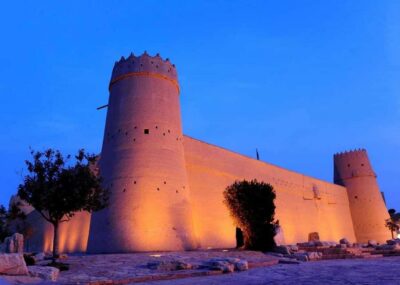
Al Masmak Fortress, Murabba Palace, and Souq Al Zal Tour
Read our review →
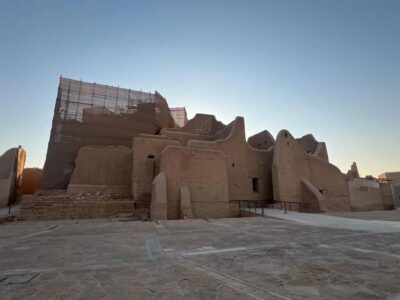
Masmak Fort, Souq AlZal, and Murabba Palace Tour
Read our review →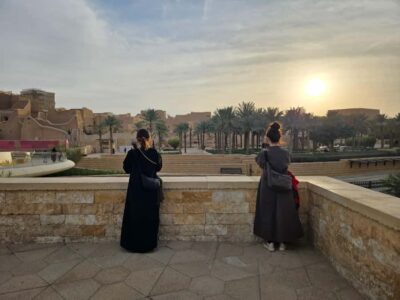
Browse the lists this tour appears in