
Reviewed · MEDINA TOURS
Madina: Guided Tour of the City’s Historical Sights
Madinah’s story is spread across the city, from the slopes of Mount Uhud to the Seven Mosques and the wells linked with the Prophet Muhammad SAW. This tour brings those places into one well-planned route, with guide Uzair explaining the religious meaning and historical setting as you go.
I like two things right away. First, the tour reaches beyond the famous mosques to places such as Beer Ghars, the Salman Farsi Well and Farm, and the House of Atban Bin Malik. Second, the price is $99 for up to four people, which can be strong value for a family or small group needing transport and a guide.
The main consideration is pace. There are many stops, and some are viewed from outside or involve open, sunny ground. You should also bring water, since drinking water at the wells may not be available during maintenance.
Key points
- Uhud combines sacred remembrance with clear physical landmarks, including Mount Uhud, Mount Rumah, the graves of Hamza and other martyrs, and Masjid Shuhada.
- The Battle of the Trench area has several names, including Ghazwa Khandaq, Masjid Fatah, Saba Masajid, and the Seven Mosques.
- Quba Mosque provides time for prayer, including two nafil prayers traditionally associated with the reward of one Umrah.
- Uzair is the named guide, offering English, Arabic, Hindi, Punjabi, and Urdu support through the provider.
- The route includes less familiar stops, such as Beer Al Khatm, Beer Ghars, the Salman Farsi Well and Farm, and As Saffiyyah Museum.
- The $99 group price covers up to four people, making it more attractive when shared by a family or small party.
Why this route helps you understand Madinah
Madinah is not a city where one grand monument tells the whole story. Its important places are scattered across neighborhoods, roads, hills, mosques, wells, and former battle sites. Without local context, you can easily see a building, take a photograph, and miss why it matters.
This guided route solves that problem. It links the main ziyarat stops into a single outing and gives you someone to explain what happened at each place. That matters most at Uhud and the Trench, where the terrain itself helps you picture the events.
The tour also suits visitors who want more than a quick circuit of the major mosques. Masjid Quba and Masjid Qibalatain are central stops, but the wells and smaller historical sites add a more personal sense of place. I especially like that the route includes sites many independent visitors might not seek out on their own.
You should think of this as a religious and historical city tour, not a museum tour with long indoor visits. Much of the experience takes place outdoors or from the vehicle. Wear practical clothing, protect yourself from the sun, and leave room in your schedule for prayer and quiet reflection.
More heritage sites around Madinah:
- Madinah Culture & History Tour – Led by Local Guide
★ 5.0 · 74 reviews - Experience Madinah’s Culture and Historical sights
★ 5.0 · 32 reviews - Prophet’s Mosque Walking Tour with Historic Hejaz Railway
★ 4.7 · 4 reviews
Starting near Masjid Nabawi and Imam Bukhari Mosque
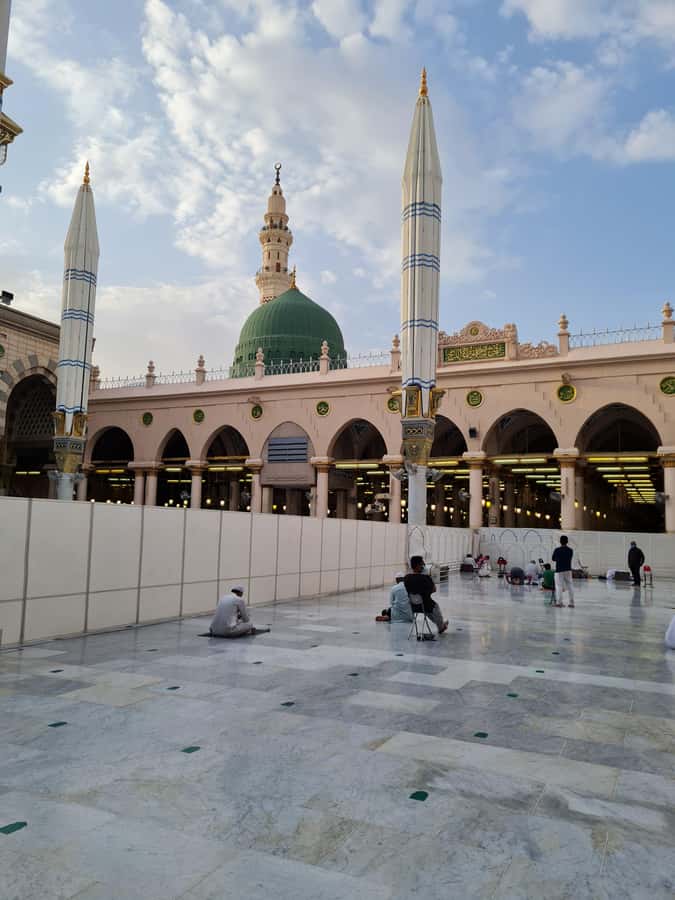
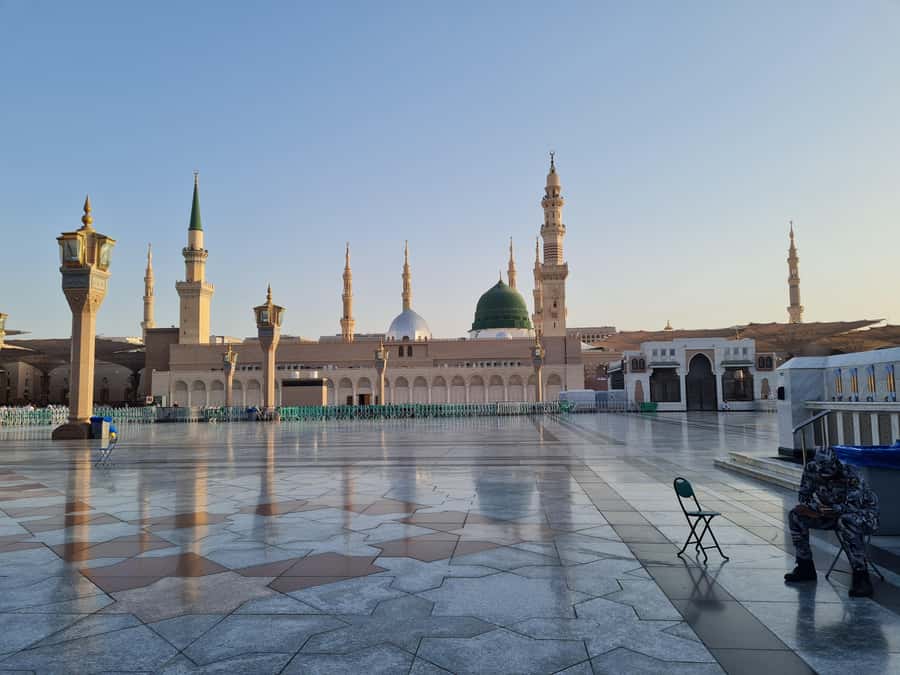
The tour begins by passing Al Masjid an Nabawi, the main mosque of Madinah, before moving to Masjid Imam Bukhari. Passing by the mosque gives you an early sense of the city’s spiritual center, but this experience does not promise an interior visit to Masjid Nabawi.
Masjid Imam Bukhari is a useful first stop because it sets the tone for the day. You are not simply ticking off famous names. The guide places each mosque within the wider religious story of Madinah, then carries that context into the battle sites and historic wells later in the route.
Uzair is the named guide, and English is available along with Arabic, Hindi, Punjabi, and Urdu. That language range is helpful for families and mixed groups. Several people who booked with him valued his clear explanations, punctual coordination, safe driving, patience with older family members, and willingness to offer refreshments.
That personal help can make a real difference during ziyarat. One family specifically needed assistance after an unfortunate incident involving a parent, and Uzair provided support beyond simply driving between stops. I would still tell you to discuss mobility needs before booking, since the tour is not suitable for pregnant women or people over 70 according to the supplied conditions.
Remembering the martyrs at the Battle of Uhud
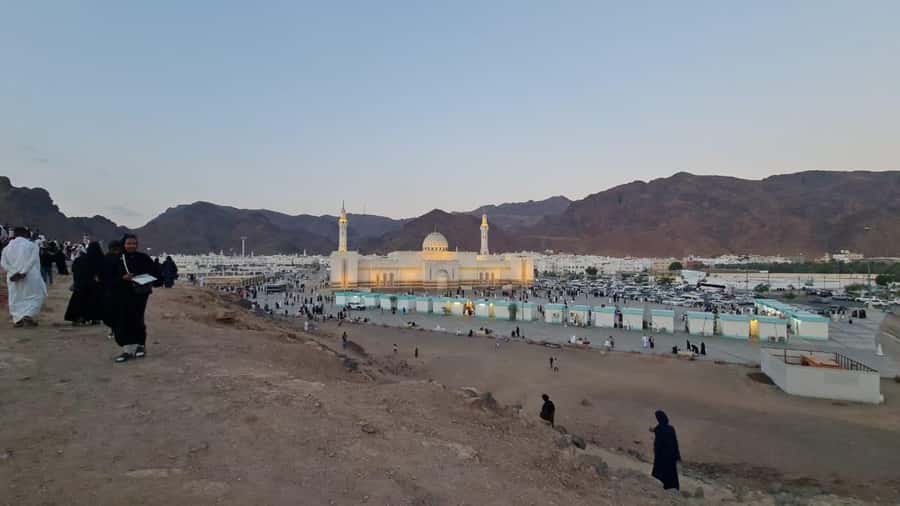
The Uhud section is likely the emotional center of the tour. You visit the area associated with the Battle of Uhud and see the graves of Hazrat Ameer Hamza, Musab Bin Umair, and other Shuhada. You also visit Masjid Shuhada and see Mount Uhud and Mount Rumah.
This is where a guide earns his place. The mountains and open ground are not just scenery. They help you understand the setting of the battle and give physical meaning to the names you hear in religious accounts. Uzair’s role is to connect the visible sites with their significance, while giving you time to offer prayers and reflect.
Expect sun and walking at this stop. Comfortable shoes, a hat, sunscreen, and your own water are sensible. The provided information warns that water may not be available at some wells during maintenance, so do not count on every historical stop having a working drinking source.
The stop is also likely to matter deeply to Muslim visitors who come to Madinah for ziyarat. You should approach it with a respectful attitude, keep clothing modest, and follow local instructions around graves and mosques. Photography may be possible in some areas, but prayer and remembrance should come before the camera.
Seeing the Seven Mosques at the Trench
The next major section covers the Battle of the Trench, also called Ghazwa Khandaq. You visit Masjid Fatah, Masjid Salman Farsi, and the Saba Masajid, a group of seven small mosques also referred to as the Seven Mosques.
The naming can be confusing, especially if you are using a map. Masjid Fatah, Saba Masajid, and Seven Mosques are connected with this part of the route, while Ghazwa Khandaq describes the battle itself. A good guide helps you keep those names straight instead of treating them as unrelated attractions.
The included experience calls for dua at Masjid Fatah. This is a quieter, more devotional part of the day than a standard sightseeing stop. You may spend only a short time at each mosque, so listen carefully to the explanation and use the pauses for prayer rather than expecting lengthy sightseeing inside every building.
I like this section because it gives the route a clear historical arc. After Uhud, you see another important place tied to the early Muslim community, then continue toward Qiblatain and Quba. The drawback is that the Seven Mosques area may feel brief if you want a long visit at every site. The route covers a lot, so the guide has to balance detail with the needs of the whole group.
A few more Madinah half-days to weigh up
- Al Madinah: City Sightseeing Hop-On Hop-Off Bus Tour
★ 3.9 · 148 reviews - Medina Unveiled Private Tour
★ 5.0 · 100 reviews - From Madinah: Half-Day Ziarah Tour
★ 4.9 · 59 reviews - City Sightseeing Al Madinah Hop-On Hop-Off Bus Tour
★ 3.0 · 50 reviews
Masjid Qiblatain and the change in prayer direction
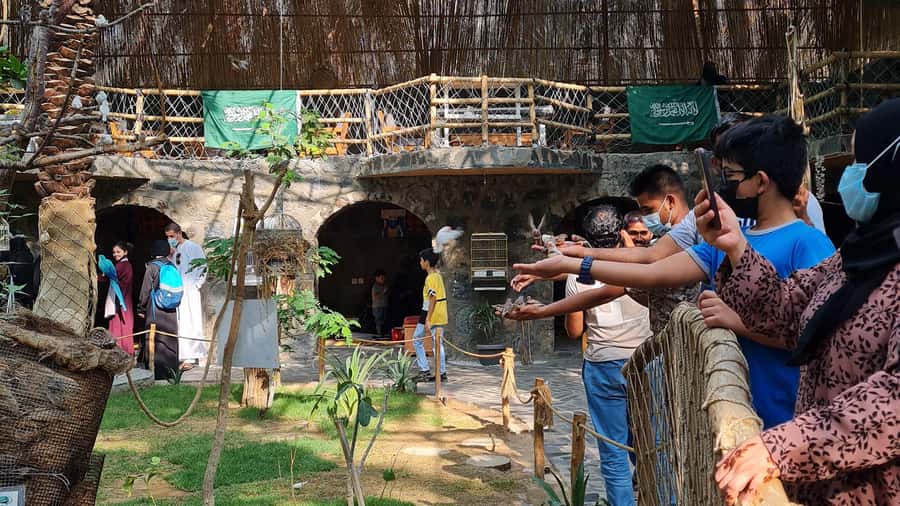
Masjid Qiblatain is one of the best-known religious stops in Madinah. Its name means the mosque of two qiblas, and the visit connects with the change in the direction of prayer.
This is a place where a short explanation adds far more than a photograph. The mosque is not simply another stop on a list. Its importance relates to a major moment in Islamic worship, and Uzair can explain that setting in a way that makes the visit easier to understand.
As with the other mosques, dress and behavior matter. Avoid shorts, short skirts, see-through clothing, and smoking. Alcohol is not allowed in the vehicle. Men should wear decent clothing and avoid shorts. Women are instructed to cover their hair and wear an abaya if their clothing is not suitable for the local religious setting.
The supplied guidance specifically mentions abayas for women wearing shorts, tights, jeans, or T-shirts. If you need one, you can buy one locally. I would handle that before the tour begins so you are not distracted by clothing arrangements during the day.
Masjid Jumah and the home of Atban Bin Malik
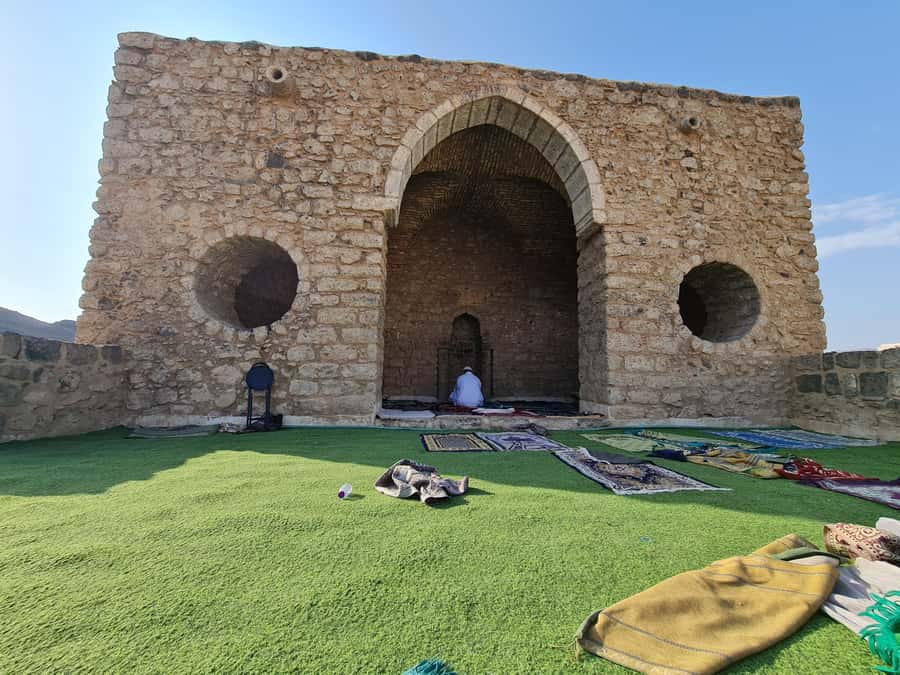
The route continues to Masjid Jumah and the House of Atban Bin Malik, viewed from outside. The house is associated with the imam of Masjid Jumah, so this part of the tour adds a domestic and community angle to the larger story of Madinah.
Do not expect a long interior visit here. The house is seen from outside, which is important to understand when setting expectations. The value comes from the explanation and from seeing how religious history is connected with ordinary homes, local worship, and early community life.
Masjid Jumah itself gives the route another mosque with a specific place in Madinah’s story. This stop may be especially useful if you want a guide to explain the difference between the city’s many mosques rather than grouping them all together.
The day’s variety is one of the strongest features. You move from major mosques to battlefields, from graves and mountains to wells and farms. That range gives you a fuller picture of Madinah than a route focused only on large, well-known buildings.
Praying at Masjid Quba
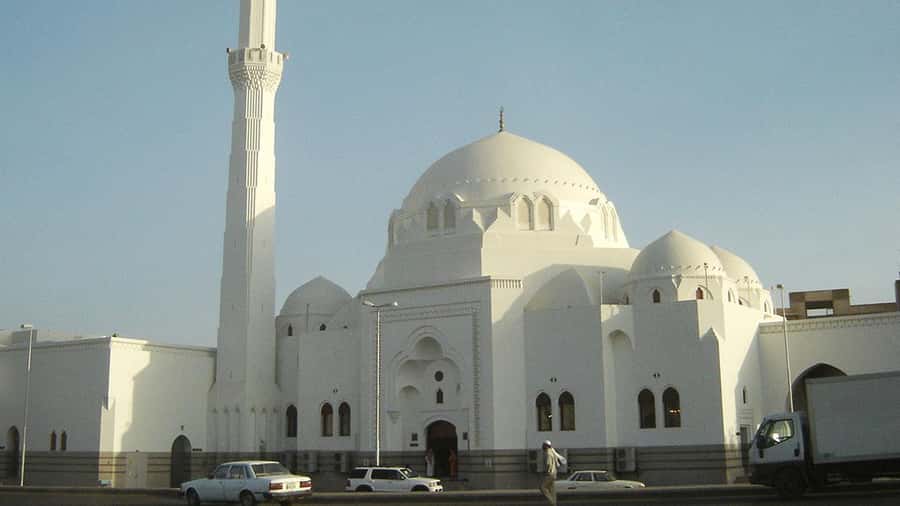
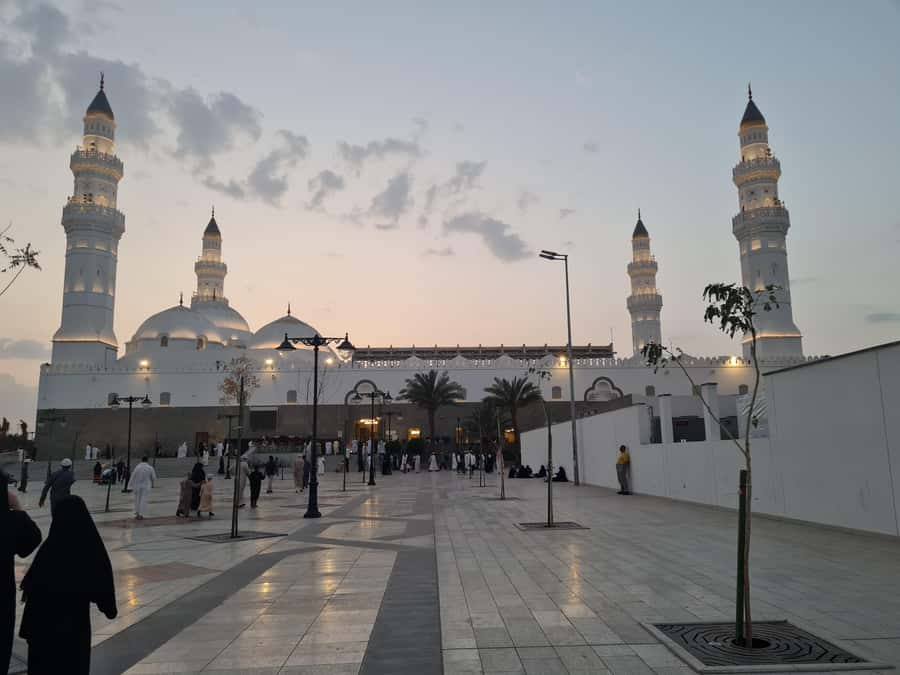
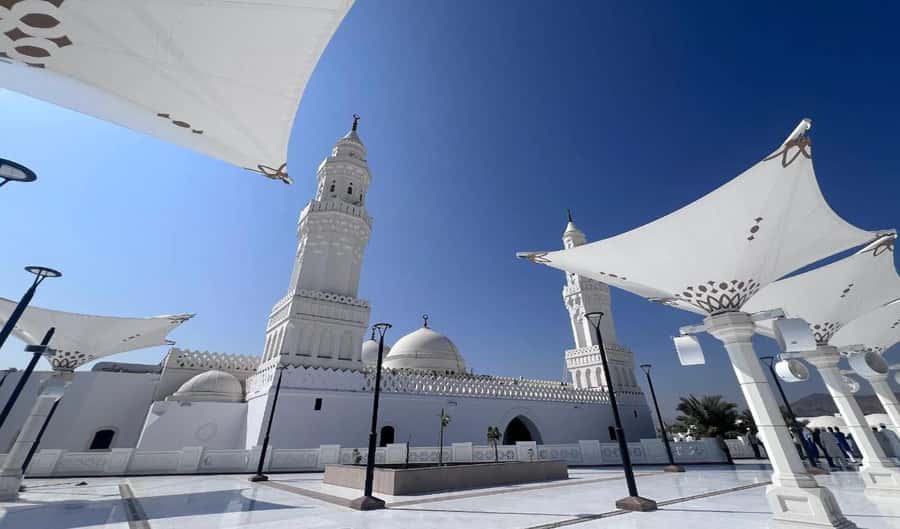
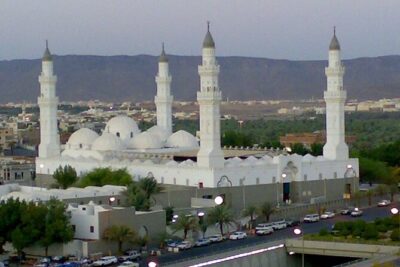
Masjid Quba is one of the tour’s most important stops. You have time to visit the mosque and pray two nafil prayers. The tour information presents this act as equal in reward to one Umrah, a belief often cited in connection with visiting Quba and praying there.
You should treat this stop as more than a quick photo break. Plan to be mentally ready for prayer, and wear clothing suitable for entering a mosque. If you are arranging the day around your own worship schedule, ask about the expected timing when you book, since the exact tour duration is not provided.
Quba also gives the itinerary a natural spiritual finish after the historical sites. By this stage you have visited battle locations, mosques, and places tied to early Muslim figures. Prayer at Quba offers a calm pause before the final historical stops.
The tour does not specify how long you will remain at each location. That is both a strength and a limitation. A flexible guide can adjust for prayer and the group’s needs, but you should not expect a fixed timetable with a guaranteed number of minutes at every mosque.
Wells, farms, and the smaller sites near Madinah
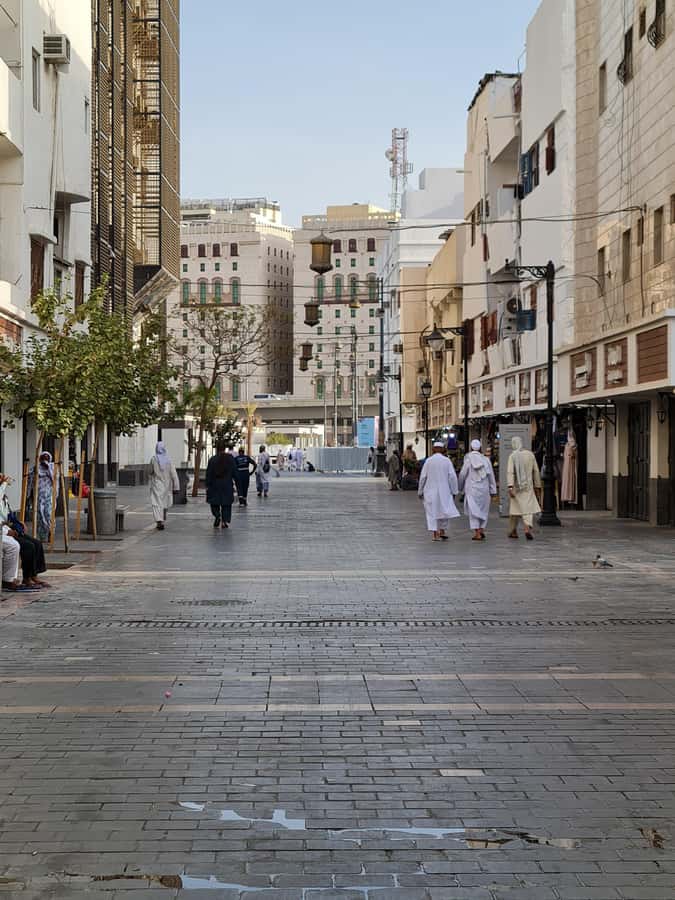
The final part of the route reaches several places that make the experience feel less like a basic city loop. Beer Al Khatm is described as the well where the ring fell. Beer Ghars is linked with the Prophet Muhammad SAW and is described as his beloved well.
You also see the Salman Farsi Well and Farm. These sites are valuable because they broaden the visit beyond formal mosques. Wells, farms, and homes show the practical side of life in and around Madinah, though their appeal depends heavily on the guide’s explanation.
The route also lists As Saffiyyah Museum and the International Fair and Museum. The supplied information does not give opening hours, admission details, or the amount of time spent there, so I would not book this tour mainly for museum access. Consider these as possible additions to the day rather than guaranteed long museum visits.
The well stops come with a practical warning. Water is sometimes unavailable because of maintenance work. Bring your own bottle and do not assume that water from a historical well will be available to drink. You should also follow any current instructions at each site.
Is $99 good value for up to four people?
At $99 per group of up to four, the arithmetic is favorable for a small family. At the full group size, the cost works out to less than $25 per person before any personal expenses. You are paying for a broad route, a guide, and vehicle transport rather than just entry to one attraction.
The value improves if you would otherwise need to arrange separate rides between Uhud, the Trench, Qiblatain, Quba, and the wells. Madinah’s historical sites are spread out, and a guide who knows the roads can reduce the effort of planning each leg.
The price is less compelling for a solo visitor who wants only Masjid Quba or Masjid Nabawi. In that case, a full city route may include more stops than you need. It makes the most sense for families, first-time visitors, pilgrims who want a structured ziyarat day, and small groups who value explanations in their preferred language.
The available feedback gives Uzair strong marks for a clean, comfortable vehicle, safe driving, easy pickup and drop-off coordination, clear English, and refreshments. Those details matter because a long day of moving between sites can become tiring if the vehicle or communication is poor.
Who should book this Madinah ziyarat tour?
I would choose this tour if you want the main historical and religious sights covered in one organized outing. It is particularly useful if you are visiting Madinah for the first time, traveling with family, or prefer not to arrange transport and site research yourself.
It also suits visitors who want a guide with patience and strong English communication. Uzair has been praised for giving detailed explanations, allowing decent time at stops, and adding useful information beyond the planned route when possible.
I would think twice if you want a slow, private study of each site or a tightly timed itinerary. The tour has many locations, and exact duration is not provided. Visitors who are pregnant or over 70 should not book this experience under the stated restrictions.
Book at least with the clothing and weather in mind. Bring comfortable shoes, a hat, sunscreen, a camera if you want one, and plenty of water. Shorts, short skirts, smoking, alcohol in the vehicle, and see-through clothing are not allowed.
Cancellation is flexible up to 24 hours before departure for a full refund, and you can reserve now while paying later. That helps if your Madinah schedule is still changing around prayers and other arrangements.
My verdict on this wide-ranging route
I recommend this tour for a small group that wants context, convenience, and a respectful introduction to Madinah’s sacred places. Its strongest feature is not any single stop. It is the way Uhud, the Trench, Qiblatain, Quba, the smaller mosques, and the wells fit together in one day of learning and prayer.
The main tradeoff is breadth. You will cover a lot, but some sites are outside visits or brief stops, and the day includes plenty of time in the vehicle. If that sounds right for you, the $99 group price is fair, especially with Uzair’s reported care, clear communication, safe driving, and help with older relatives.
I would book it for a family or group of up to four, particularly if you want English, Urdu, Punjabi, Hindi, or Arabic guidance. I would skip it only if you need a very slow pace, have mobility or health concerns covered by the restrictions, or want to focus on one mosque rather than the wider story of Madinah.
FAQ
How much does the Madinah historical sights tour cost?
The price is $99 per group of up to four people.
Which languages are available?
The tour is available in Arabic, English, Hindi, Punjabi, and Urdu.
Does the tour visit Masjid Nabawi?
The route passes by Al Masjid an Nabawi, the main grand mosque of Madinah. The information does not state that the tour includes an interior visit.
Which Battle of Uhud sites are included?
You visit the Battle of Uhud area, see Mount Uhud and Mount Rumah, and visit Masjid Shuhada. The route also includes the graves of Hazrat Ameer Hamza, Musab Bin Umair, and other Shuhada.
What does the Battle of the Trench section include?
It includes Masjid Fatah, Masjid Salman Farsi, and Saba Masajid, also called the Seven Mosques. Dua at Masjid Fatah is included.
Can I pray at Masjid Quba?
Yes. The tour includes a visit to Masjid Quba and the opportunity to pray two nafil prayers there.
Are Masjid Jumah and the House of Atban Bin Malik visited inside?
Masjid Jumah is included, while the House of Atban Bin Malik is viewed from outside.
Is the tour suitable for everyone?
It is not suitable for pregnant women or people over 70 years old. Visitors should also follow the stated clothing rules and bring water, sunscreen, and comfortable shoes.
Can I cancel the booking?
You can cancel up to 24 hours in advance for a full refund. The reserve and pay later option lets you keep your plans flexible.
Just added around Madinah
- Half – Day Tour in Prophet Mohammed City★ 5.0 · 4 reviews
- Prophet’s Mosque Walking Tour with Historic Hejaz Railway★ 4.7 · 4 reviews
- Medina Ziyarats ( Visit Holy Places)★ 4.2 · 4 reviews
- Prophet Biography Tour of Madinah★ 4.6 · 5 reviews
- 1 Hour Private Horse Riding in Madinah★ 4.0 · 5 reviews
- Experience Madinah’s Culture and Historical sights★ 5.0 · 32 reviews
- Madinah Ziyarats (Private tour)★ 3.5 · 26 reviews
- 4WD Adventure in Uhud Mountain★ 4.5 · 29 reviews
Medina Tours, compared.
City Sightseeing Al Madinah Hop-On Hop-Off Bus Tour
Read our review →

Browse the lists this tour appears in